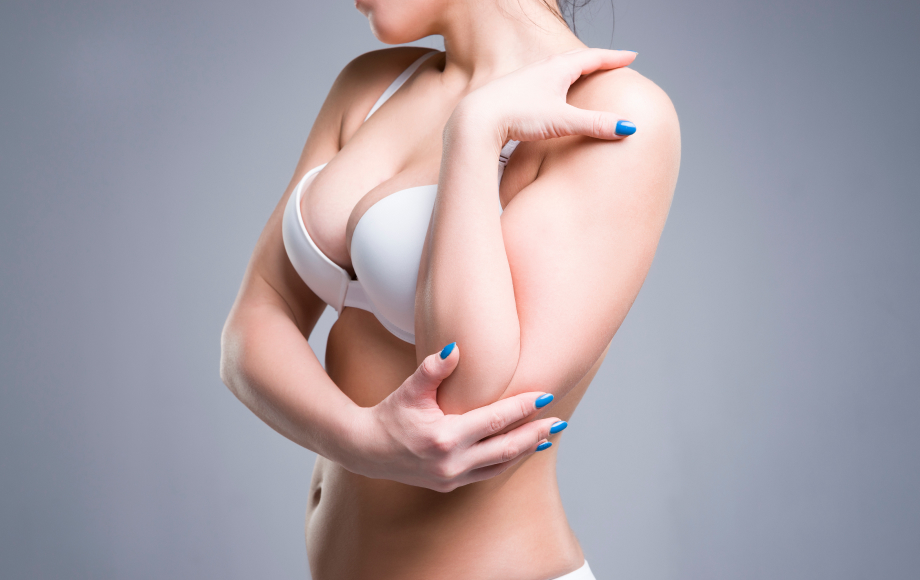
The breast implant settling process describes the gradual transformation your implants undergo as they move from their initial post-surgical position into a softer, more natural placement. This process is sometimes called “drop and fluff,” and it is a completely normal part of recovering from breast augmentation. If you recently had surgery in Atlanta, Georgia, or are still researching the procedure, understanding this timeline can ease a lot of early anxiety about how your results look and feel.
Key Takeaways
- The breast implant settling process typically spans 3-6 months, though full softening can take up to a year. Every patient’s tissue responds differently, so timelines vary based on implant type, placement, and skin elasticity.
- Implants sit high and appear firm immediately after surgery because of swelling and tightened chest muscles. This high positioning is expected and gradually resolves as tissues relax over the following weeks.
- Most patients notice the majority of the “drop and fluff” change within the first 6-8 weeks. Final, subtle adjustments continue for several more months as scar tissue softens.
- Gentle massage, when approved by your surgeon, can help encourage even, natural settling. It is typically introduced once initial healing has progressed enough to avoid disrupting incisions.
- Persistent asymmetry, unusual pain, or hardness beyond 6 months should be evaluated by your surgeon. These signs may indicate capsular contracture or another issue requiring attention.
If you are preparing for breast augmentation or have questions about your recovery timeline, request a consultation with our team. We are happy to walk you through exactly what to expect at every stage.
Understanding the “Drop and Fluff” Process
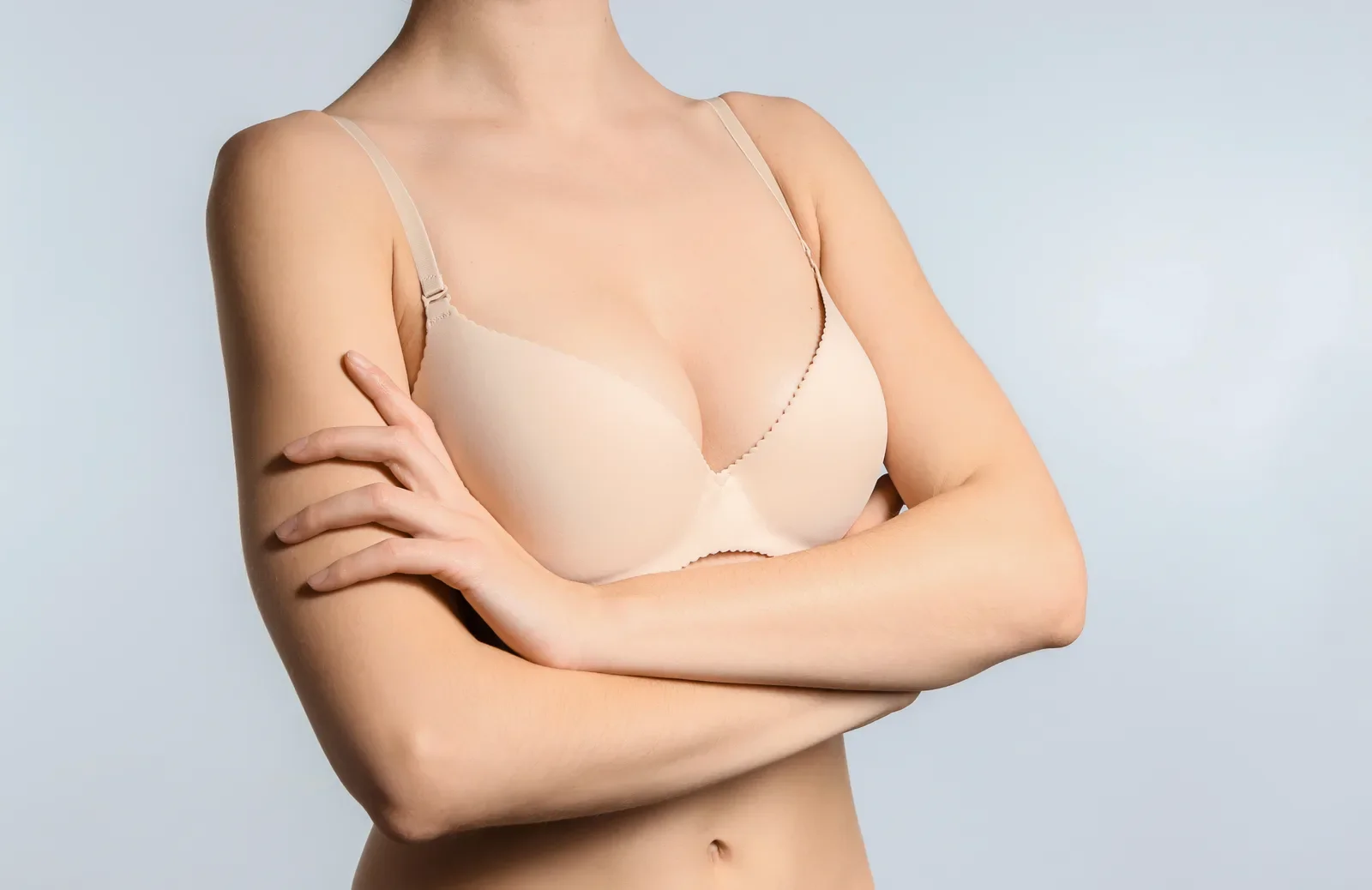
“Drop and fluff” is the nickname patients and surgeons use for the natural evolution breast implants go through after augmentation. In the early weeks, implants tend to sit high on the chest and look somewhat rounded or firm at the top. Over time, gravity, tissue relaxation, and healing allow the implants to “drop” into a lower, more natural position on the chest wall.
The “fluff” portion refers to the way breast tissue settles around and over the implant, softening its edges and creating a more natural slope. Together, these changes produce the final aesthetic outcome most patients are hoping to achieve from breast augmentation.
What Implant Settling Means
Implant settling refers to the physical repositioning of a breast implant within the pocket your surgeon created during surgery. Immediately after augmentation, swelling, tightened muscle, and healing tissue hold the implant in a temporarily elevated position.
As inflammation subsides and your chest muscles relax, the implant gradually shifts downward and outward into its intended location. This is not a sign of complication. It is the expected, planned progression toward your final results. Your surgeon accounts for this settling when determining implant size, profile, and pocket placement during your original procedure planning.
Why Implants Need Time to Settle Naturally
Breast implants need time to settle because your body is healing from surgical trauma to muscle, tissue, and skin. Swelling takes weeks to resolve fully, and the surgical pocket needs time to accommodate the implant’s exact shape and volume.
Additionally, if your implant was placed under the pectoral muscle (submuscular placement), that muscle needs to relax and stretch gradually to allow the implant to move into a lower, more natural position. Rushing this process, or attempting to manipulate results too early, can interfere with healing and compromise your final outcome. Patience during this phase is essential to achieving symmetrical, natural-looking results.
Why Implants Sit High at First
Implants sit high immediately after surgery because swelling and muscle tension hold them in an elevated position within the pocket. This is especially common with submuscular placement, where the pectoral muscle has been lifted and is still tight from the surgical process.
Many patients describe this stage as looking “athletic” or overly full at the top, which can feel concerning if you are not expecting it. Rest assured this high, firm appearance is temporary. As swelling decreases over the coming weeks and the muscle gradually relaxes, gravity naturally helps guide the implant into a softer, lower position that better matches your natural breast tissue.
The Drop and Fluff Timeline
The drop and fluff timeline generally unfolds in phases over several months following surgery. In the first 1-2 weeks, implants sit high and feel firm due to swelling. Between weeks 3-6, you may notice the earliest signs of settling as swelling begins to subside.
By months 2-3, most patients see significant changes as implants drop into a lower position and breast tissue begins to fluff around the edges. From months 4-6, results continue refining, with implants appearing softer and more symmetrical. Some patients continue seeing subtle improvements up to the one-year mark, particularly with larger implants or firmer skin.
How Long Settling Typically Takes
Breast implant settling typically takes 3-6 months to reach a largely finished appearance, though complete softening can take up to a full year in some cases. Factors influencing this timeline include implant size, placement (submuscular versus subglandular), skin elasticity, and individual healing rate.
Patients with thinner skin or lower body fat may see faster settling, while those with larger implants or tighter chest muscles may need additional time. According to the U.S. Food and Drug Administration, individual healing after breast implant surgery varies considerably, which is why your surgeon will track your progress at follow-up visits rather than relying on a fixed calendar.
Signs Implants Are Settling Properly
Signs that implants are settling properly include gradually decreasing firmness, improving symmetry between the two breasts, and a slow, natural downward movement over several weeks. You should also notice swelling and tightness diminishing steadily rather than staying constant or worsening.
- Softening tissue: The upper pole gradually loses its firm, rounded appearance.
- Improved symmetry: Both breasts begin settling at a similar pace, even if not perfectly identical.
- Reduced tightness: Sensations of pulling or pressure across the chest lessen over time.
- Natural movement: Breasts begin to move more naturally with your body rather than feeling rigid.
If swelling worsens, one breast settles dramatically differently than the other, or you notice significant pain, contact your surgical team promptly.
How to Support the Settling Process
You can support healthy implant settling by closely following your surgeon’s post-operative instructions, wearing recommended compression garments, and avoiding strenuous upper body activity too soon. Gentle massage, when specifically approved by your surgeon, may help encourage even tissue relaxation around the implant.
Sleeping in the position your surgeon recommends, typically on your back for several weeks, can also prevent uneven pressure on healing tissue. Attending all scheduled follow-up appointments allows Dr. Alan N. Larsen to monitor your progress and address any concerns early. Our experienced care team, led by double board-certified surgeon Dr. Larsen, provides personalized guidance at every stage of your recovery to help you achieve smooth, natural-looking results.
Frequently Asked Questions About Breast Implant Settling
What does the breast implant settling process mean?
The breast implant settling process refers to how implants gradually shift from a high, firm post-surgical position into a lower, softer, more natural placement. This happens as swelling resolves and surrounding tissue relaxes over several months.
How long does it take for breast implants to drop and fluff?
Most patients see significant drop and fluff progress within 3-6 months, though full settling can take up to a year in some cases. Implant size, placement technique, and individual healing rate all affect the timeline.
Is it normal for implants to feel tight at first?
Yes, tightness is a normal and expected part of early recovery, especially with submuscular implant placement. This sensation typically eases significantly within the first several weeks as muscles relax and swelling subsides.
Do breast implants settle at different speeds?
Yes, it is common for one breast to settle slightly faster than the other during recovery. Minor differences in timing are typical and usually even out as both sides continue healing.
Can massage help implants settle properly?
Gentle massage may help support even, natural settling, but only when specifically recommended and approved by your surgeon. Never begin massage techniques without direct guidance, since timing and method vary by procedure.
When will breast implants feel soft and natural?
Most patients notice a soft, natural feel by the 3-6 month mark, with continued subtle improvement up to one year. Skin elasticity and implant type both influence how quickly this softness develops.
What should I avoid while implants are settling?
Avoid strenuous upper body exercise, underwire bras, sleeping on your stomach, and any unapproved massage techniques during early settling. Following your surgeon’s specific restrictions helps protect your results and supports even healing.
Trust Your Recovery to an Experienced Atlanta Team
Every breast augmentation journey is unique, and the settling process deserves the same personalized attention as your original surgery. At Buckhead Plastic Surgery in Atlanta, Georgia, Dr. Alan N. Larsen and our exemplary team provide attentive, boutique-level care throughout your entire recovery, not just on surgery day.
If you have questions about your own settling timeline or are considering breast augmentation for the first time, contact Buckhead Plastic Surgery today. Our team is here to help you feel confident and informed at every stage of your transformation.